
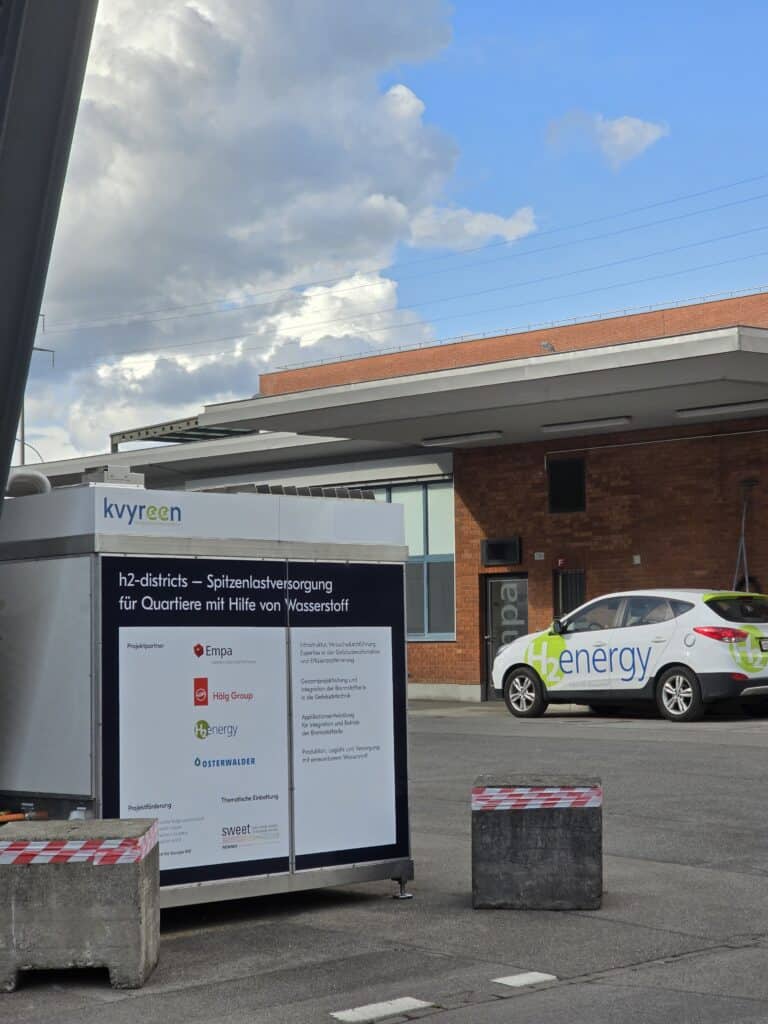
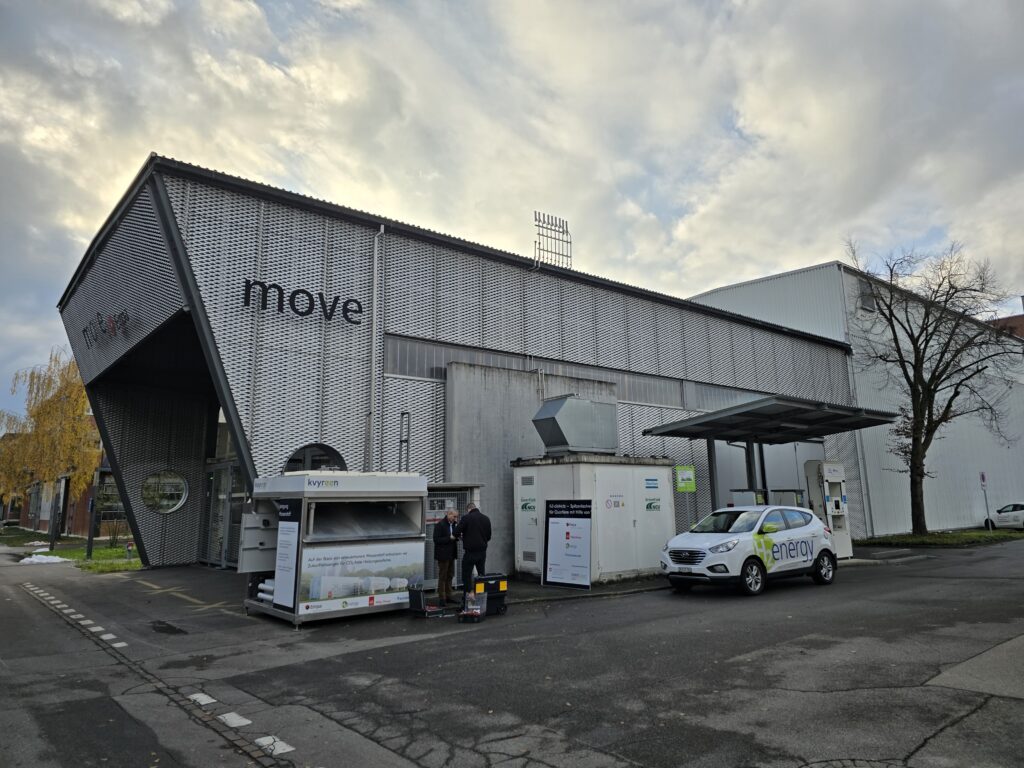
H2 Energy, together with Hälg Group, Osterwalder Group, and Empa, presented a joint project on hydrogen fuel cells for reducing peak loads in district energy systems, tested at Empa’s NEST and “move” campus in Dübendorf, supplying electricity and heat to building networks.
Between October 2023 and September 2025, operational models and design foundations for hydrogen-based peak-load systems were developed and tested at the “move” campus in Dübendorf within Empa’s Energy Hub, validating performance and CO₂ savings. The project was part of the SWEET-PATHFNDR program and supported by the Swiss Federal Office of Energy (SFOE).
Main Findings
The results of the two-year project phase were consistently positive with the following main findings:
- Hydrogen fuel cell CHP prototype enables rapid power ramps (≤3 min) with 40–48% electrical and 30–50% thermal efficiency, resulting in an overall efficiency between 70 and 98%.
- Model predictive control reduces operating costs by >10% and lowers peak grid demand by ~10 kW, supporting grid stability and delaying network upgrades.
- Economic viability depends on high peak power fees and sufficient seasonal demand.
- Ageing-aware optimization reduces optimal system sizing by up to 28%, enabling more accurate long-term investment planning and supporting durable, low-carbon energy solutions.
Applications of Hydrogen Fuel Cells
The most promising applications are in urban districts with heat pumps or district heating systems, where peak loads are difficult to manage, as well as in high-demand facilities such as schools, sports halls, swimming pools, hotels, and logistics centers with frequent energy peaks.
The project shows that hydrogen fuel cells can effectively balance electrical and thermal peak loads in buildings, confirming their suitability for peak load management and supporting better energy system design.
Using green hydrogen also enables measurable CO₂ reductions, contributing to a more resilient and low-carbon energy future
A Collaborative Step Forward
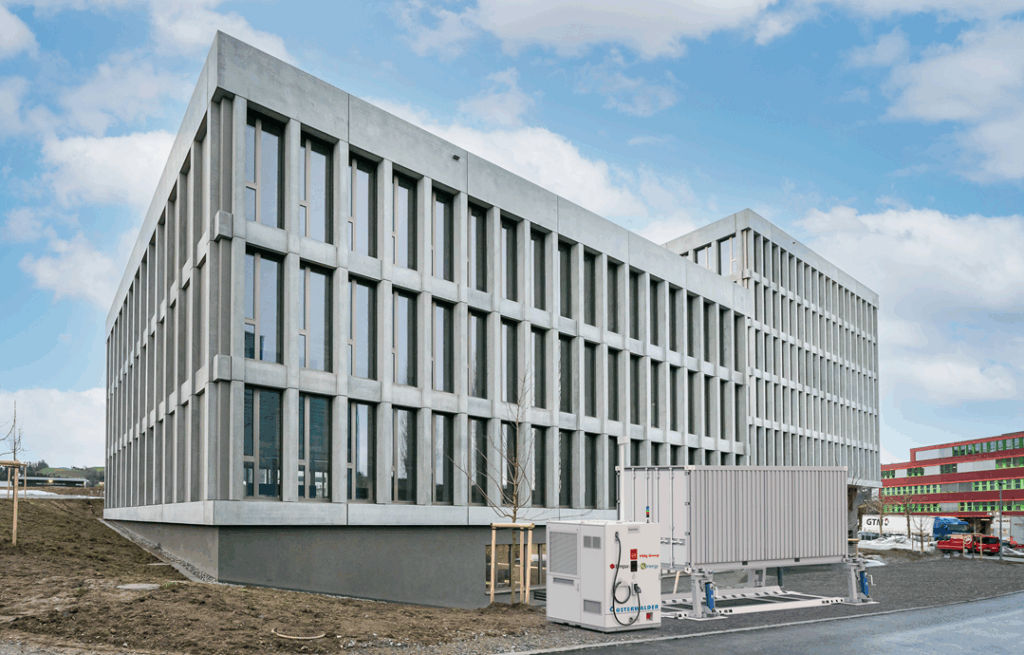
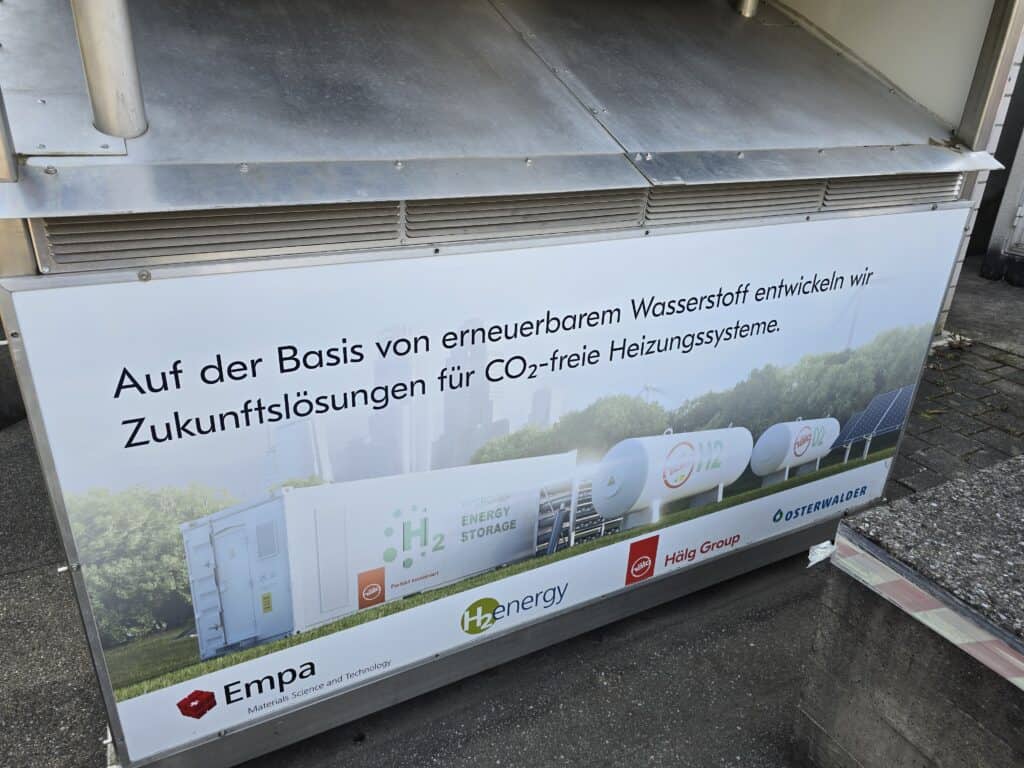
The “H2 Districts” research project, carried out through the joint efforts of H2 Energy, Hälg Group, Osterwalder St. Gallen AG, and Empa, marks an important step in demonstrating the role of hydrogen fuel cells in future energy systems. Overall, the project provides a solid foundation for the further development and real-world application of green hydrogen solutions.
Learn more about H2 Energy`s offering for Hydrogen Fuel Cell`s in combined heat and power applications here.
More about Hälg Group
More about Osterwalder St. Gallen AG
More about Empa
More about H2 Energy